Garage Door Roller Replacement

Rollers & hinges.
Smoother travel.
Rattles, squeaks, and rough travel can turn a simple arrival into a daily interruption. Worn rollers may be part of the story. Let’s look at the whole path.
Small parts. Noticeable difference. · Residential service in the Atlanta area
From a daily noise
to a useful next step.
Notice the pattern
Is it a steady rumble, a squeak at one joint, or a sudden scrape? Describe it without repeatedly running a struggling door.
Look beyond one part
Rollers, hinges, tracks, balance, and opener noise can overlap. A quieter door begins with identifying the source.
Match the repair
Ask which parts need attention, why they are appropriate, and what improvement the proposed work is expected to make.
A quieter door starts
with understanding the noise.
Explore worn rollers, noisy hinges, and rough or vibrating door movement.
A rolling rumble
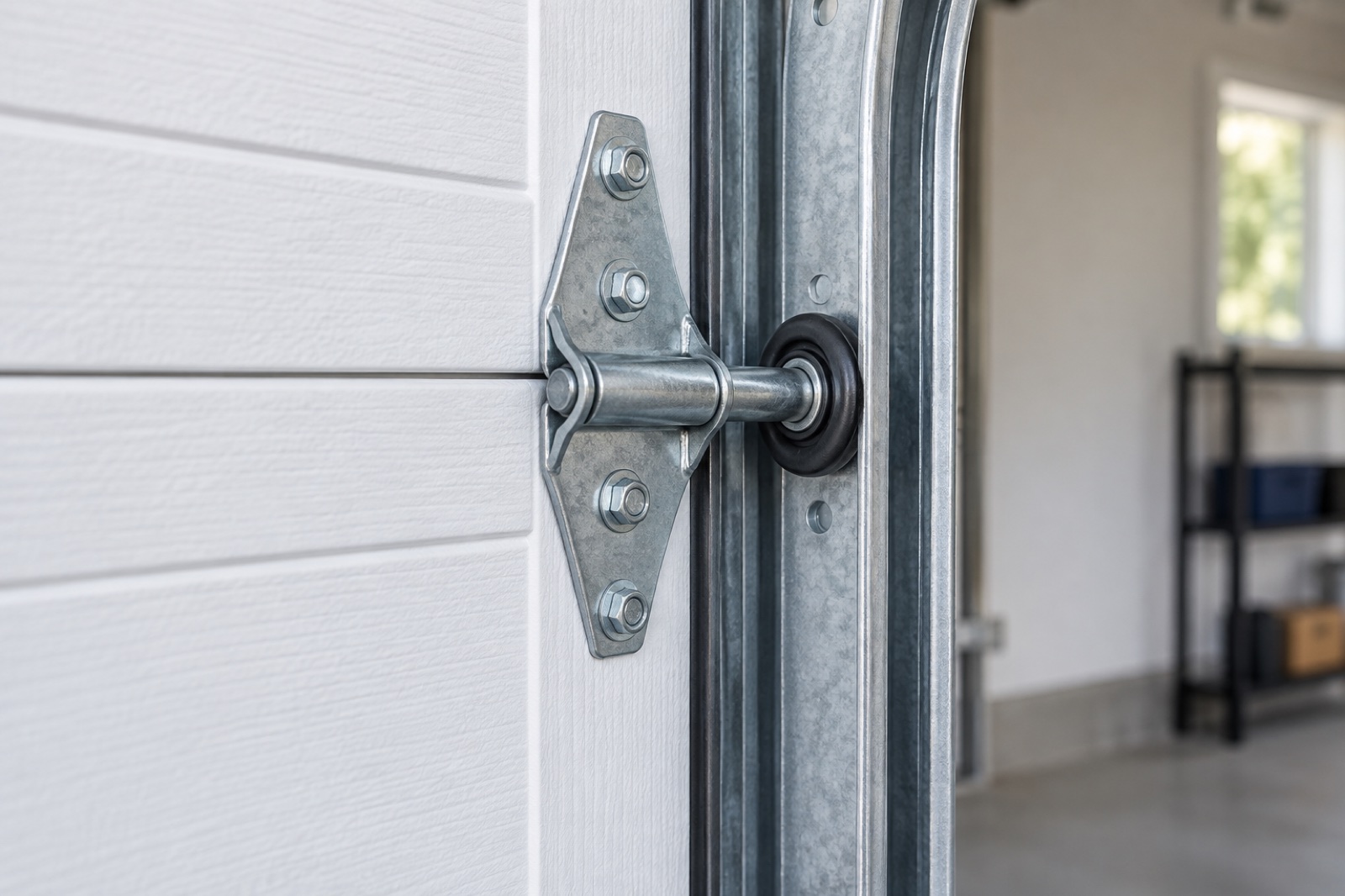
Worn rollers or bearings can contribute to vibration and rough movement.
A squeak at the joints
Hinges and other moving hardware may need inspection and appropriate care.
A scrape or sudden jolt
Track alignment, damage, or a different mechanical fault may be involved. Stop if the door binds.
Quieter is good.
Smooth and safe comes first.
Noise is a useful clue, not a diagnosis. The goal is controlled movement with appropriate hardware. Ask which sound the proposed repair should address and what else needs attention.
Avoid a blanket spray
Use only care products and application points recommended for your door. Lubricant does not repair a worn or damaged part.
Leave bottom hardware alone
Some roller and bracket locations are connected to the lifting system. Professional assessment is the safer starting point.
The roller has to suit
the door and track.
Material, dimensions, bearing design, and door use affect a replacement choice. New rollers may help reduce one source of noise, but they will not correct every track or balance problem.
- Identify where the sound begins
- Inspect rollers, hinges, and the track path
- Check for binding or related hardware wear
- Discuss suitable parts and expected improvement
A little clarity
goes a long way.
Questions about garage door roller replacement? These are good places to start.
Are nylon rollers always the best option?
No single roller suits every door. Size, bearing quality, load, track configuration, and use all matter. Ask which replacement fits your system.
Will new rollers make the door silent?
They may reduce roller noise. An opener, hinges, tracks, springs, or loose hardware can create other sounds, so silence cannot be promised.
Can I replace the bottom rollers myself?
Leave bottom brackets and related hardware alone. They can be connected to cables under spring tension.
Is lubrication enough for a noisy door?
Sometimes appropriate care helps, but wear, misalignment, or damage may require repair. A new or worsening noise deserves assessment.
You may also
want to explore.
Tell us what you hear when the door moves.
Share your location and a short description. Ask about service for your ZIP code, the next available appointment, and any visit charges.
Send your ZIP code and a brief description. We’ll discuss availability and the next step. Email opens your email app.